Getting your Korean visa from Dubai is straightforward with this guide. We break down the essential steps, required documents, and tips for a smooth application process, ensuring your journey to South Korea is planned with confidence.
Key Takeaways
- Understand visa types and eligibility for applicants in Dubai.
- Prepare a comprehensive set of required documents accurately.
- Book an appointment at the Korean Embassy or Consulate.
- Submit your application with all necessary forms and fees.
- Follow up on your application status diligently.
Dreaming of Seoul’s vibrant culture, Busan’s coastal charm, or the historical wonders of Gyeongju? Many residents and expatriates in Dubai find themselves planning trips to South Korea. Navigating the process of how to get a Korean visa in Dubai might seem daunting, but it’s a well-defined procedure designed for clarity. This guide will walk you through every step, from understanding the different visa categories to submitting your application, ensuring a stress-free experience.
Understanding Korean Visa Requirements for Dubai Residents
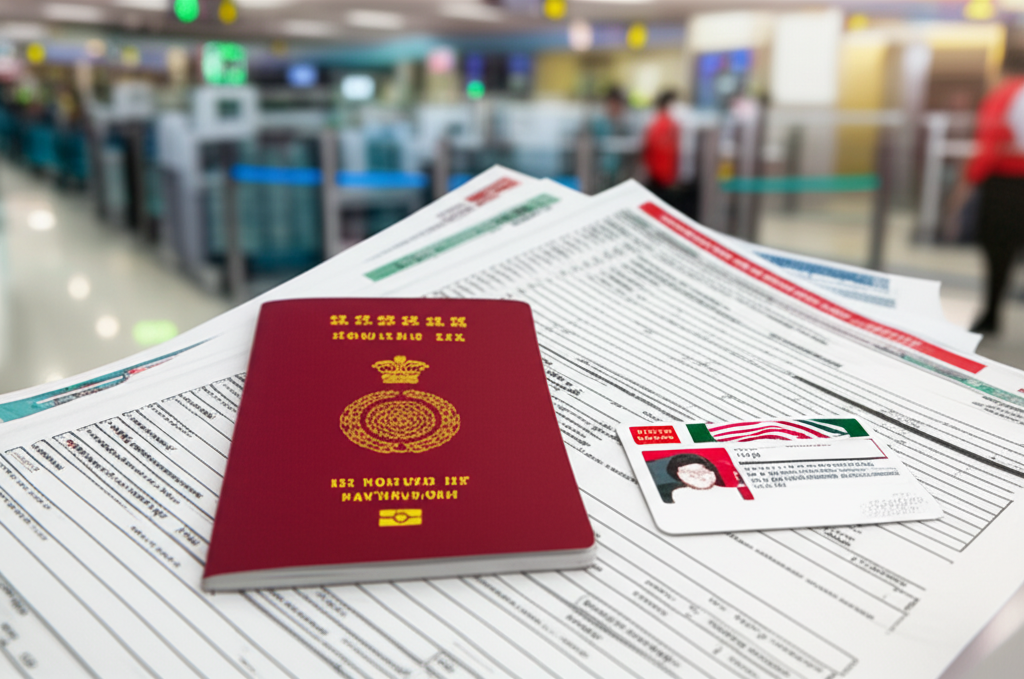
As a resident in Dubai, your Korean visa application will be handled by the Embassy of the Republic of Korea in the UAE, typically located in Abu Dhabi, or its Consulate General in Dubai, depending on your visa type and circumstances. It’s crucial to identify the correct visa category that aligns with your purpose of travel. This ensures you gather the right documentation and meet the specific criteria.
Common Visa Categories for UAE Residents
South Korea offers various visa types, and understanding which one applies to you is the first step. For most short-term visits from Dubai, you’ll likely be looking at short-term visitor visas. These can be further categorized based on the purpose:
- Short-Term Visit Visa (C-3): This is the most common type for tourism, visiting family or friends, or short business trips. It has several sub-categories, such as:
- C-3-1: For general tourism.
- C-3-2: For visiting relatives.
- C-3-4: For short-term business purposes.
- C-3-9: For general short-term visits.
- Student Visa (D-2/D-4): If you plan to study at a Korean educational institution.
- Work Visa (various types, e.g., E series): For those with employment offers in Korea.
- Spouse/Family Visa: For accompanying family members of Korean citizens or long-term residents.
For the purpose of this guide, we will focus primarily on the Short-Term Visit Visa (C-3), as it is the most frequently applied for by individuals in Dubai seeking to explore South Korea. Always confirm the exact visa type with the Embassy or Consulate if you are unsure.
Essential Documents for Your Korean Visa Application from Dubai
The foundation of a successful visa application lies in thorough preparation of all required documents. Each document serves to prove your identity, your intention to visit Korea, and your ability to support yourself during your stay, and your commitment to return to Dubai. Missing or incorrect documents are the most common reasons for visa application delays or rejections.
General Required Documents for Short-Term Visit Visa (C-3)
While specific requirements can vary slightly, the following is a comprehensive list of documents typically needed when applying for a short-term visitor visa from Dubai:
- Visa Application Form: Fully completed and signed. This form is usually available for download from the Embassy or Consulate’s official website.
- Passport: Original passport valid for at least six months beyond your intended stay in South Korea, with at least two blank pages for visa stamps. Include copies of the passport’s bio-data page and any previous UAE visas.
- Photograph: Recent passport-sized photographs (usually 2-3 copies) meeting specific requirements (e.g., white background, specific dimensions).
- Emirates ID: A copy of your valid Emirates ID card.
- Proof of Residence in the UAE: This could be your Emirates ID, a tenancy contract, or a utility bill addressed to you. For expats, this is critical to establish your legal residency in Dubai.
- Flight Itinerary: A confirmed flight booking showing your entry and exit dates from South Korea. You do not necessarily need to purchase the tickets outright; a reservation is often sufficient at the application stage.
- Proof of Accommodation: Hotel bookings or a letter of invitation from your host in Korea, if applicable. If staying with friends or family, their details and possibly a letter of invitation will be required.
- Financial Proof: Bank statements for the last three to six months, showing sufficient funds to cover your trip. This demonstrates your financial capability to travel and return.
- Letter from Employer/Sponsor:
- For Employed Individuals: An original letter from your employer on company letterhead, stating your position, salary, length of employment, and confirming approved leave for your trip. The letter should also state that you are expected to return to your job after the trip.
- For Self-Employed Individuals: Business trade license, company bank statements, and tax returns.
- For Students: A letter from your educational institution confirming enrollment and approved leave.
- For Dependents (e.g., spouse, children): A sponsorship letter from the primary applicant or spouse, along with their employment/financial documents.
- Travel Insurance: A comprehensive travel insurance policy covering medical emergencies and repatriation for the duration of your stay.
Special Considerations and Additional Documents
Depending on your specific circumstances and the visa sub-category, you might need to provide additional documents. For instance:
- For Business Visas: A letter from the Korean company you are visiting, detailing the purpose of your visit and their willingness to cover your expenses.
- For Visiting Family/Friends: A letter of invitation from your host in Korea, along with a copy of their Korean ID or passport, and proof of your relationship.
- For Marriage/Family Visas: Marriage certificates, birth certificates, and other family relation documents, all officially translated and attested.
It is always advisable to check the official website of the Embassy of the Republic of Korea in the UAE or the Consulate General of the Republic of Korea in Dubai for the most up-to-date and specific document requirements. Their websites are invaluable resources for detailed checklists and forms.
Applying for Your Korean Visa: Step-by-Step Process
Once you have gathered all necessary documents, the next phase is to formally apply for your visa. The process is structured to be efficient, especially when you are well-prepared. In Dubai, applications are usually processed through the Embassy or Consulate, often requiring an appointment to manage visitor flow. The process can also be managed through authorized visa application centers for certain visa types.
Step 1: Determine the Correct Visa Type and Gather Documents
As outlined above, the first and most critical step is to identify the exact visa category you need and compile all the supporting documents. Double-check each document for accuracy and completeness. Ensure all translations and attestations (if required) are done correctly.
Step 2: Book an Appointment
Most Embassies and Consulates require applicants to book an appointment online before visiting. This ensures that they can manage the number of visitors and provide prompt service. Visit the official website of the Korean Embassy or Consulate in Dubai to find their appointment booking system. Availability can vary, so it’s wise to book your appointment well in advance, especially during peak travel seasons.
Step 3: Complete the Visa Application Form
Download the official visa application form from the Embassy or Consulate website. Fill it out accurately and legibly, preferably in English or Korean. Ensure all sections are completed, and sign where required. Do not leave any fields blank unless explicitly stated that they are not applicable to your situation.
Step 4: Submit Your Application and Pay the Visa Fee
On the day of your appointment, arrive at the Embassy or Consulate with your completed application form, all original documents, and their photocopies. You will likely need to present your application in person. The visa fee needs to be paid at the time of submission. The fee amount varies depending on the visa type and nationality of the applicant. It’s best to check the current fee structure on the Embassy’s website or inquire directly.
Payments are typically accepted in AED. The Embassy or Consulate will provide you with a receipt for your payment and your submitted documents.
Step 5: Attend an Interview (If Required)
In some cases, the visa officer may request an interview to clarify details about your application or your travel plans. This is not always mandatory but be prepared for the possibility. If called for an interview, answer all questions truthfully and concisely.
Step 6: Track Your Application
The processing time for a Korean visa can vary, usually taking between 10 to 15 working days, but it can be longer depending on the volume of applications and the complexity of your case. Some Embassies or Consulates provide an online tracking system, or you can inquire about the status via phone or email as per their instructions.
Step 7: Collect Your Passport and Visa
Once your application is approved, you will be notified to collect your passport with the inserted visa sticker. You may need to present your application receipt and a valid ID. If your visa is denied, the Embassy or Consulate will provide a reason for the refusal, and you can then decide on your next steps, which might include reapplying after addressing the concerns.
Korean Embassy and Consulates in the UAE
It’s vital to know which official mission you should approach. The primary points of contact for Korean visa applications from Dubai are:
Embassy of the Republic of Korea in the UAE
While the Embassy is located in Abu Dhabi, it often handles specific visa categories or processes. For residents of Dubai, it’s crucial to verify if your specific visa type is processed here or at the Consulate. It’s always best to confirm directly with them.
Address: Plot No. 35, Sector 2-2, Diplomatic Area, Abu Dhabi, United Arab Emirates.
Website: Always check the official website for the most current contact information and services offered.
Consulate General of the Republic of Korea in Dubai
For many residents in Dubai, the Consulate General is the direct point of contact for visa applications, especially for short-term visits. They are equipped to handle a significant volume of tourist and business visa applications.
Address: 33rd Floor, The Fairmont Dubai, Sheikh Zayed Road, Dubai, UAE.
Website: Refer to the official website of the Consulate General of the Republic of Korea in Dubai for their specific visa application procedures, operating hours, and contact details.
Important Note: Visa processing procedures and locations can change. Always verify the most current information on the official website of the Korean Embassy or Consulate General in the UAE before initiating your application.
Visa Fees and Processing Times
Understanding the costs and expected timelines is essential for planning your travel budget and schedule. The fees and times can fluctuate, so checking with the official sources is always recommended.
Typical Visa Fees
Visa fees for South Korea vary based on the type of visa and its duration. For short-term visas (e.g., C-3), the fees generally fall within the following ranges:
| Visa Type | Fee (AED) | Notes |
|---|---|---|
| Short-Term Visit (Single Entry, up to 90 days) | Approx. 110 – 150 AED | Subject to change. |
| Short-Term Visit (Multiple Entry, up to 90 days per entry) | Approx. 165 – 220 AED | May have different eligibility criteria. |
| Longer-Term Visas | Varies | Fees are higher and depend on specific visa category. |
These are approximate figures and can be subject to change by the Korean government. It’s crucial to confirm the exact fee with the Embassy or Consulate at the time of your application. Visa fees are typically non-refundable, even if the visa is denied.
Estimated Processing Times
The standard processing time for a Korean visa application from Dubai is generally between 10 to 15 working days. However, this can be influenced by several factors:
- Volume of Applications: During peak travel seasons (e.g., holidays, summer breaks), processing times may be extended.
- Completeness of Application: Incomplete applications or missing documents will cause delays.
- Visa Type Complexity: Certain visa categories may require more extensive verification, leading to longer processing times.
- Embassy/Consulate Workload: Public holidays in the UAE or Korea can also affect processing schedules.
It is highly recommended to apply for your visa at least 4 to 6 weeks before your intended departure date to allow ample time for processing and to accommodate any unforeseen delays.
Pro Tips for a Smooth Visa Application Process
To ensure your application is as smooth as possible, consider these expert tips:
Pro Tip: Always secure your financial documents. Ensure your bank statements are clear, show consistent income, and have a healthy balance. If you have significant recent deposits, be prepared to explain their origin to avoid suspicion.
Common Pitfalls to Avoid
Even with careful planning, some common mistakes can hinder your visa application. Being aware of these pitfalls can save you time and frustration.
- Insufficient Financial Proof: This is a leading cause of rejection. Ensure your bank statements clearly demonstrate you can afford your trip and return to Dubai.
- Incomplete or Inaccurate Application Forms: Double-check all entries for typos or omissions. Use official forms only.
- Lack of Clear Travel Itinerary: Vague travel plans can raise concerns. Provide as much detail as possible for your flight and accommodation bookings.
- Irrelevant or Missing Supporting Documents: Carefully review the checklist provided by the Embassy/Consulate and ensure all requested documents are submitted.
- Applying Too Late: Start the process well in advance of your travel dates to avoid last-minute rushes and rejections due to processing delays.
- Not Meeting Residency Requirements: Ensure you have valid residency in the UAE and can prove it with the requested documentation.
Frequently Asked Questions (FAQs)
Q1: Can I apply for a Korean visa from Dubai if I am not a resident?
Typically, visa applications are handled by the Korean Embassy or Consulate in the country where you have legal residency. If you are a tourist in Dubai, you might need to apply for your Korean visa from your home country. However, specific cases may vary, so it’s best to contact the Korean Consulate General in Dubai directly to inquire about your situation.
Q2: How long is the validity of a Korean tourist visa from Dubai?
For a single-entry short-term tourist visa (C-3-9), the validity period for the visa sticker is usually 3 months from the date of issue, meaning you must enter South Korea within this period. Your stay in Korea itself is typically limited to up to 90 days.
Q3: Do I need to purchase flight tickets before applying for the visa?
Generally, a confirmed flight itinerary or reservation is sufficient for the visa application. It is advisable to wait until your visa is approved before purchasing non-refundable airline tickets to avoid financial loss in case of visa rejection.
Q4: What is the difference between applying at the Embassy and the Consulate in the UAE?
The Embassy in Abu Dhabi and the Consulate General in Dubai handle different types of visas and application volumes. For most short-term tourist and business visas for residents in Dubai, the Consulate General in Dubai is the primary point of contact. For specific long-term visas or complex cases, the Embassy might be involved. Always verify which mission handles your specific visa type.
Q5: Can I extend my Korean visa if I am already in South Korea?
Visa extensions are generally only granted in very specific, unforeseen circumstances, such as medical emergencies or natural disasters. For typical tourist or short-term visits, you are expected to depart South Korea before your visa expiry. You would need to apply for a new visa for any subsequent visit.
Q6: What should I do if my Korean visa application is rejected?
If your visa application is rejected, the Embassy or Consulate will usually provide a letter stating the reasons for refusal. Carefully review these reasons and try to address the issues – for example, by providing stronger financial documentation or clarifying your travel purpose. You can then reapply, ensuring all concerns are met.
Conclusion
Embarking on a journey to South Korea from Dubai is an exciting prospect, and understanding how to get your Korean visa is a critical first step. By carefully identifying the correct visa category, meticulously preparing all required documentation, and following the official application procedures at the Korean Embassy or Consulate General in the UAE, you can navigate this process with confidence. Remember to apply well in advance of your travel dates to allow for processing and to avoid any last-minute stress. With this guide, you are well-equipped to plan your Korean adventure.